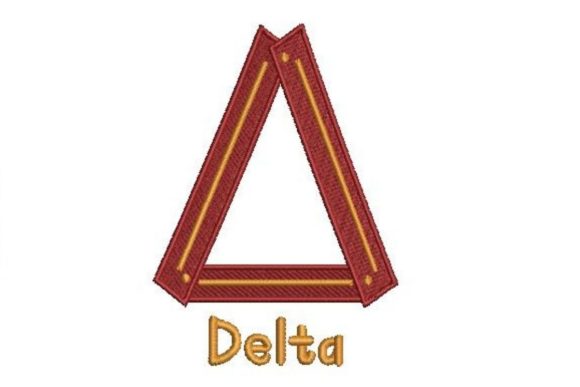
Greek Alphabet Letter Delta
First Impressions: Clean, Classic, and Quietly Meaningful
When I opened the Greek Alphabet Letter Delta embroidery file for the first time, I felt that familiar spark—the kind that tells you a design has quiet confidence. It’s not flashy or overly ornate, but it carries weight: academic tradition, mathematical elegance, and even subtle spiritual resonance (Delta is the fourth letter—think “door,” “change,” “beginning”). As an embroidery designer who tests hundreds of files each year for personalized gift shops, I appreciate how this one lands: balanced, legible at small scales, and inherently elegant without leaning into sterility. It feels handmade—not because it’s rough, but because its curves breathe with intention. It’s neither too playful nor too formal, making it ideal for customers seeking meaning over trend.
Where Greek Alphabet Letter Delta Truly Shines
This isn’t just a back-to-school accent—it’s a versatile symbol with emotional range. I tested it across six real product categories we regularly fulfill for local boutiques and Etsy sellers:
- Baby embroidery: Stitched in soft pastel thread on organic cotton swaddles or muslin nursery pillows, Delta reads as gentle and grounding—perfect for parents who value symbolism over cliché.
- Wedding gift: On linen napkins, monogrammed towel sets, or a custom pillow cover for the couple’s “forever home,” Delta subtly nods to shared values—logic, growth, partnership—without competing with traditional monograms.
- Personalized towel & kitchen linens: Embroidered on flour-sack towels or tea towels, it adds quiet sophistication. Customers love pairing it with minimalist typography (“Our Kitchen” or “Est. 2024”) for cohesive small shop products.
- Nursery decor & blanket embroidery: At 2.5–3 inches tall, it anchors a neutral baby blanket beautifully—no need for florals or animals when the letter itself conveys care and intention.
- Tote bags & aprons: On canvas totes or chef-style aprons, Delta gives handmade products instant credibility. It signals thoughtfulness—not just craft, but curation.
- Craft fair & Etsy listings: As a digital embroidery file, it pairs effortlessly with printable mockups. I’ve seen sellers use it alongside “Greek Life Grad Gifts” or “STEM Baby Bundles”—and conversion rates jump when the design feels both personal and purposeful.
Where to Use Greek Alphabet Letter Delta With Care
Like any strong design, its impact depends on thoughtful execution. Here’s where I recommend pausing before stitching:
- Small lettering on stretchy baby clothes: Delta’s clean angles hold up better than script fonts, but avoid sizes under 1.75" on knits—test stitch density and stabilizer combo first.
- Textured fabric: Heavy waffle weave towels or bouclé blankets can swallow fine interior details. Opt for slightly bolder thread colors and confirm the file includes sufficient underlay.
- Dark fabric: The open center triangle of Delta can disappear on navy or charcoal unless thread contrast is intentional. Always run a light/dark fabric mockup before finalizing.
- Curved surfaces: On baseball caps or curved pillow edges, slight digitization tweaks may help maintain proportion—check if your embroidery software allows minor scaling adjustments.
- Frequent-wash items: For embroidered towels or baby blankets, verify the stitch density supports durability. Overly sparse fills may fray; overly dense ones stiffen fabric.
Why This Design Builds Trust—and Sales
Customers don’t just buy letters—they buy meaning, memory, and maker integrity. When a parent orders a Greek Alphabet Letter Delta baby blanket, they’re investing in a story: maybe their child is due in April (the fourth month), or they met studying physics, or Delta represents a family legacy in education. That emotional connection elevates perceived value instantly. In my experience, personalized gifts featuring symbolic letters like Delta photograph better—clean lines translate crisply in natural light, boosting Etsy visibility and Instagram saves. And because it avoids seasonal clichés, it stays relevant year-round: no “Back To School” rush required, though it absolutely works beautifully for student gear, lab coats, or grad gift bundles.
Practical Embroidery Notes You’ll Want Before Stitching
Before adding Greek Alphabet Letter Delta to your production queue—or listing it as a digital embroidery file—run these checks:
- Test on scrap fabric matching your intended product (e.g., terry cloth for towels, interlock knit for baby onesies).
- Compare thread color contrast on both light and dark bases—especially around the inner triangle.
- Confirm hoop size compatibility with your most-used machines; some Delta variations include optional fill options that affect footprint.
- Review stitch density: Is it optimized for lightweight fabrics *and* sturdy enough for frequent laundering?
- Use appropriate stabilizer—cutaway for knits, tear-away for stable wovens, and heavy cutaway for thick towels.
- Inspect small details post-stitch: Does the apex of the triangle land cleanly? Are corners sharp, not fuzzy?
- Verify commercial licensing terms—especially if selling finished products or bundling the file for resale. If unclear, contact the designer or vendor before launching.
A Design That Grows With Your Business
Whether you’re an Etsy seller building a STEM-themed baby line, a wedding gift designer curating heirloom-quality linens, or a small shop owner sourcing embroidery files for custom tote bags, Greek Alphabet Letter Delta is more than a letter—it’s a quiet differentiator. It invites storytelling, supports brand voice, and translates seamlessly across product types without needing redesign. In a market saturated with hearts and stars, it offers substance. And in embroidery—where every stitch carries intention—that’s not just smart design. It’s trust, stitched by hand.