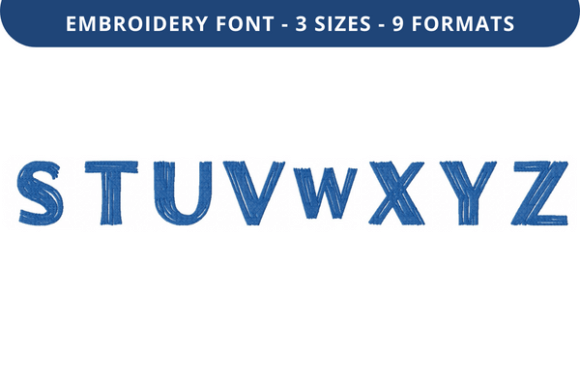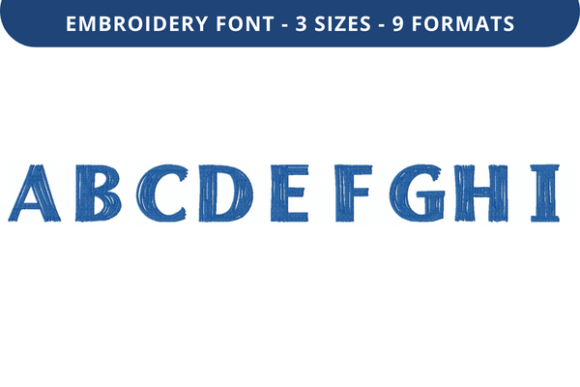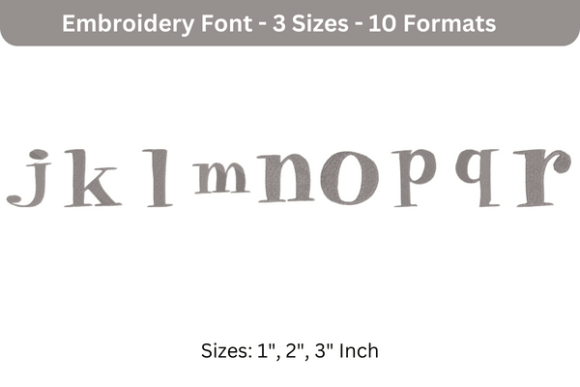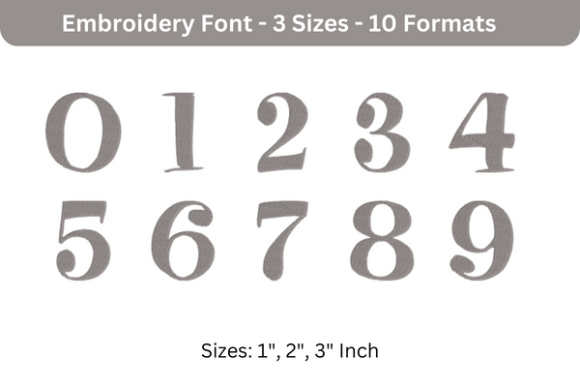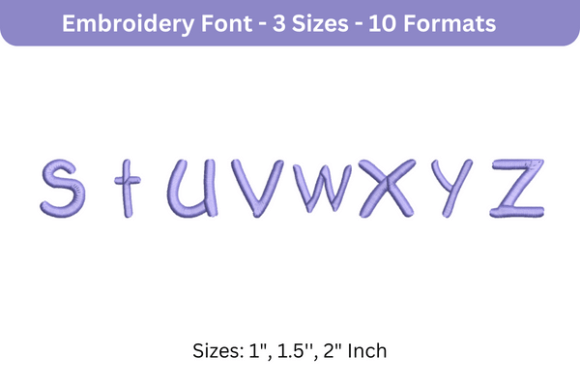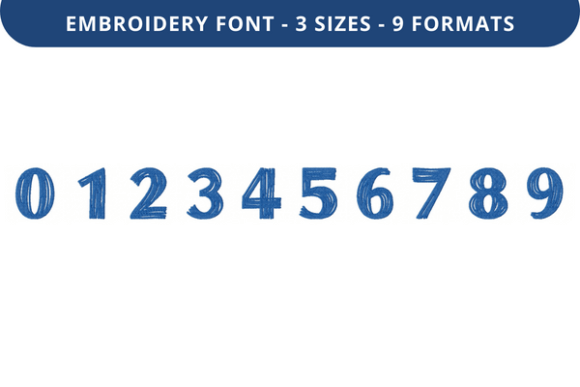
Hay Girl Hay Font 0 to 9
A Designer’s First Stitch with Hay Girl Hay Font 0 to 9
As an embroidery designer who’s shipped over 3,000 personalized gifts—from baby blankets stitched in midnight blue to wedding pillow covers embroidered in ivory thread—I opened the Hay Girl Hay Font 0 to 9 file with quiet anticipation. Not for its novelty, but for its promise: a cohesive, hand-drawn charm that feels both nostalgic and fresh. The first impression? Sweet, yes—but not saccharine. Playful, yes—but never childish. There’s a gentle bounce to each numeral, soft curves that echo pencil sketches, and just enough irregularity to feel handmade—not algorithmic. It’s the kind of machine embroidery design that whispers “I made this just for you,” even when stitched by machine.
Where This Font Finds Its Perfect Moment
Hay Girl Hay Font 0 to 9 shines brightest where meaning lives in the details—where numbers aren’t just identifiers, but milestones. Think: a newborn’s birth date on a muslin swaddle, a wedding anniversary on a linen napkin set, or a child’s first day of kindergarten (yes—Back To School fits beautifully here) stitched onto a custom tote bag. It’s ideal for baby embroidery on onesies and burp cloths, where softness matters as much as legibility. For wedding gifts, it pairs effortlessly with script monograms—imagine “2024” nestled beneath entwined initials on a velvet pillow cover. And for Etsy sellers? This font elevates simple items—like plain cotton towels or canvas aprons—into heirloom-caliber handmade products customers photograph, tag, and gift with intention.
Real-World Applications That Build Trust
- Baby embroidery: Use “0”–“9” to mark milestone blankets (“1st Month,” “6 Months,” “1 Year”)—the rounded forms resist distortion on stretchy knit fabrics when stabilized well.
- Wedding gift: Embroider the couple’s year on a set of monogrammed kitchen towels—Hay Girl Hay Font 0 to 9 adds warmth without competing with formal lettering.
- Nursery decor: Pair with animal motifs or botanical silhouettes on crib sheets or wall hangings—the font’s organic flow complements nature-inspired themes.
- Small shop product: Bundle the font with editable name + number combos for digital embroidery file listings—ideal for craft fair vendors offering instant personalization.
- Custom embroidery previews: Drop the numerals into printable mockups alongside realistic fabric textures—customers instantly visualize how “2025” will look on their graduation cap towel or baby’s milestone blanket.
Where to Pause—and Test—Before Stitching
Like any expressive font, Hay Girl Hay Font 0 to 9 rewards thoughtful application. Its charm lives in its subtle thickness variations and delicate terminals—details that can blur or vanish if pushed too far. Avoid using it below 0.35” height on dense, textured fabric like terry cloth or heavy linen—we’ve seen the “8”’s inner loops merge on thick embroidered towels without proper stabilizer. On dark fabric, contrast is non-negotiable: test thread colors against your base before committing. And while it handles gentle curves (think: curved hem of a pillow cover) gracefully, avoid wrapping it tightly around cylindrical surfaces like mugs or tapered bottles—distortion risks increase quickly.
Practical Notes Every Maker Should Keep Handy
- Always stitch a test on scrap fabric—especially when switching between light and dark backgrounds or moving from cotton to knits.
- Confirm hoop size compatibility before digitizing full names + numbers—some versions may require larger hoops for full-number sequences.
- Review stitch density: high-density fills in the “6” or “9” may cause puckering on lightweight baby clothes unless balanced with appropriate underlay and stabilizer.
- Match stabilizer to fabric texture: tear-away for stable wovens, cut-away for knits, and water-soluble for delicate lace overlays.
- Compare light/dark fabric mockups side-by-side—what reads clearly on ivory may disappear on charcoal without adjusting thread weight or density.
- Check small details post-stitch: inspect inner loops and connecting strokes—especially after washing a sample—to ensure durability for finished product longevity.
- Verify commercial licensing before selling items featuring Hay Girl Hay Font 0 to 9. As a digital embroidery file, its use in physical goods hinges on clear permissions—don’t assume.
Why Customers Choose—and Remember—This Kind of Personalized Gift
It’s not just about legibility. It’s about resonance. When a new parent receives a blanket with “0”–“3” stitched beside tiny footprints, they don’t see digits—they see time, tenderness, and presence. That emotional connection lifts perceived value far beyond material cost. Photographers love Hay Girl Hay Font 0 to 9 because its soft edges render beautifully in natural light—no harsh shadows, no pixelated edges in product photography. For Etsy sellers and small business owners, that translates directly to higher engagement: longer dwell time, more saved listings, and repeat buyers seeking consistency across collections. Even in a crowded market—whether for Back To School launches or wedding season—it stands out not by shouting, but by leaning in quietly, confidently, and warmly.
Final Thought: A Font That Feels Like a Handshake
Hay Girl Hay Font 0 to 9 doesn’t try to be everything. It’s not ultra-minimalist. It’s not vintage-serif formal. It’s a friendly, confident, gently imperfect voice in a world of sterile fonts—and that’s exactly why it works so well for personalized gift products. Whether you’re stitching for a boutique nursery line, building an Etsy shop around heartfelt keepsakes, or curating custom embroidery kits for craft fairs, this font invites customers in. It says, “This was chosen—not generated.” And in handmade product culture, that distinction isn’t just aesthetic. It’s trust, stitched one numeral at a time.